Subscribe in a reader

Rechercher dans ce blog

PAGES

Pages vues depuis décembre 2009

Affichage des articles dont le libellé est absolute speeds. Afficher tous les articles

lundi 4 janvier 2016

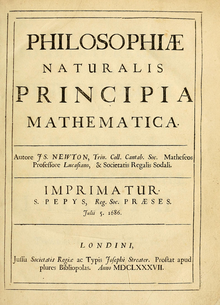
Isaac Newton's Scholium in Principia Mathematica (The hidden theories of Isaac Newton : without "absolute speeds" in Scholium and De Gravitatione, his works make no sense !!!)

presentation Yanick Toutain

REVACTU
4/1/2016


The coordinates of a body having a rectilinear trajectory in relation to a body making a circle never will trace a straight line segment.
For Newton, inertia is the straight trajectory of a body performing route "per se", objectively, in the vacuum, whether or not an observer.
We must write the truth in this anniversary day !

Newton was in fact a materialist philosopher within the meaning of the epistemology  of Lenin in 1908 (from Engels (and Marx).)
Isaac Newton had torn down the stupidities of René Descartes (inherited from .... Aristoteles) on the relative speeds, when he was 23 years old. (in his De Gravitatione)
This is how we must read the Scholium of the Principia beginnnig with the introduction.
Reading Newton's book by replacing its science by the stupidities of Einstein, Mach and Poincaré, ... is spitting in face of the biggest scientist of the human History.
Doing this is erasing the theses of the De Gravitatione.
It is thus necessary to reread attentively this text.

source: http://web.mnstate.edu/gracyk/courses/web%20publishing/NewtonScholium.htm


Sir Isaac Newton: Principia Mathematica (1687) SCHOLIUM ON ABSOLUTE SPACE AND TIME
1. Hitherto I have laid down the definitions of such words as are less known, and explained the sense in which I would have them to be understood in the following discourse. I do not define time, space, place and motion, as being well known to all. Only I must observe, that the vulgar conceive those quantities under no other notions but from the relation they bear to sensible objects. And thence arise certain prejudices, for the removing of which, it will be convenient to distinguish them into absolute and relative, true and apparent, mathematical and common.

2. Absolute, true, and mathematical time, of itself, and from its own nature flows equably without regard to anything external, and by another name is called duration: [Absolute time is to be contrasted with] relative, apparent, and common time, [which] is some sensible and external (whether accurate or unequable) measure of duration by the means of motion, which is commonly used instead of true time; such as an hour, a day, a month, a year.

3. Absolute space, in its own nature, without regard to anything external, remains always similar and immovable. Relative space is some movable dimension or measure of the absolute spaces; which our senses determine by its position to bodies; and which is vulgarly taken for immovable space; such is the dimension of a subterranean, an æreal, or celestial space, determined by its position in respect of the earth. Absolute and relative space, are the same in figure and magnitude; but they do not remain always numerically the same. For if the earth, for instance, moves, a space of our air, which relatively and in respect of the earth remains always the same, will at one time be one part of the absolute space into which the air passes; at another time it will be another part of the same, and so, absolutely understood, it will be perpetually mutable.

4. Place is a part of space which a body takes up, and is according to the space, either absolute or relative. I say, a part of space; not the situation nor the external surface of the body. For the places of equal solids are always equal; but their [boundaries], by reason of their dissimilar figures, are often unequal. Positions properly have no quantity, nor are they so much the places themselves, as the properties of places. The motion of the whole is the same thing with the sum of the motions of the parts; that is, the translation of the whole, out of its place, is the same thing with the sum of the translations of the parts out of their places; and therefore the place of the whole is the same thing with the sum of the places of the parts, and for that reason, it is internal, and in the whole body.

5. Absolute motion is the translation of a body from one absolute place into another; and relative motion, the translation from one relative place into another. Thus in a ship under sail, the relative place of a body is that part of the ship which the body possesses; or that part of its cavity which the body fills, and which therefore moves together with the ship: and relative rest is the continuance of the body in the same part of the ship, or of its cavity. But real, absolute rest, is the continuance of the body in the same part of that immovable space, in which the ship itself, its cavity, and all that it contains, is moved. Wherefore if the earth is really at rest, the body, which relatively rests in the ship, will really and absolutely move with the same velocity which the ship has on the earth. But if the earth also moves, the true and absolute motion of the body will arise, partly from the true motion of the earth, in immovable space; partly from the relative motion of the ship on the earth; and if the body moves also relatively in the ship; its true motion will arise, partly from the true motion of the earth, in immovable space, and partly from the relative motions as well of the ship on the earth, as of the body in the ship; and from these relative motions will arise the relative motion of the body on the earth. As if that part of the earth, where the ship is, was truly moved toward the east, with a velocity of 10010 parts; while the ship itself, with fresh gale, and full sails, is carried towards the west, with a velocity expressed by 10 of those parts; but a sailor walks in the ship towards the east, with 1 part of the said velocity; then the sailor will be moved truly in immovable space towards the east, with a velocity of 10001 parts, and relatively on the earth towards the west, with a velocity of 9 of those parts.

6. Absolute time, in astronomy, is distinguished from relative, by the equation or correlation of the vulgar time. For the natural days are truly unequal, though they are commonly considered as equal and used for a measure of time; astronomers correct this inequality for their more accurate deducing of the celestial motions. It may be, that there is no such thing as an equable motion, whereby time may be accurately measured. All motions may be accelerated and retarded, but the true, or equable, progress of absolute time is liable to no change. The duration or perseverance of the existence of things remains the same, whether the motions are swift or slow, or none at all: and therefore, it ought to be distinguished from what are only sensible measures thereof; and out of which we collect it, by means of the astronomical equation. The necessity of which equation, for determining the times of a phænomenon, is [shown] as well from the experiments of the pendulum clock, as by eclipses of the satellites of Jupiter.

7. As the order of the parts of time is immutable, so also is the order of the parts of space. . . . All things are placed in time as to order of succession; and in space as to order of situation. It is from their essence or nature that they are places; and that the primary places of things should be moveable, is absurd. These are therefore the absolute places; and translations out of those places, are the only absolute motions.

8. But because the parts of space cannot be seen, or distinguished from one another by our senses, therefore in their stead we use sensible measures of them. For from the positions and distances of things from any body considered as immovable, we define all places; and then with respect to such places, we estimate all motions, considering bodies as transferred from some of those places into others. And so, instead of absolute places and motions, we use relative ones; and that without any inconvenience in common affairs; but in philosophical disquisitions, we ought to abstract from our senses, and consider things themselves, distinct from what are only sensible measures of them. For it may be that there is no body really at rest, to which the places and motions of others may be referred. . . .

9. It is a property of motion, that the parts, which retain given positions to their  wholes, do partake of the motions of those wholes. . . . Therefore, if surrounding bodies are moved, those that are relatively at rest within them, will  partake of their motion. . . .

10. A property, near akin to the preceding, is this, that if a place is moved, whatever is placed therein moves along with it; and therefore a body, which is moved from a place in motion, partakes also of the motion of its place. Upon which account, all motions, from places in motion, are no other than parts of entire and absolute motions; and every entire motion is composed of the motion of the body out of its first place, and the motion of this place out of its place; and so on, until we come to some immovable place, as in the before-mentioned example of the sailor. Wherefore, entire and absolute motions can be no otherwise determined than by immovable places; and for that reason I did before refer those absolute motions to immovable places, but relative ones to movable places. Now no other places are immovable but those that, from infinity to infinity, do all retain the same given position to one another; and upon this account must ever remain unmoved; and do thereby constitute immovable space. . . .

11. The effects which distinguish absolute from relative motion are, the forces of receding from the axis of circular motion. For there are no such forces in a circular motion purely relative, but in a true and absolute circular motion, they are greater or less, according to the quantity of the motion. . . . There is only one real circular motion of any one revolving body, corresponding to only one power of endeavoring to recede from its axis of motion, as its proper and adequate effect; but relative motions, in one and the same body, are innumerable, according to the various relations it bears to external bodies, and like other relations, are altogether destitute of any real effect, any otherwise than they may partake of that one only true motion. And therefore in their system who suppose that our heavens, revolving below the sphere of the fixed stars, carry the planets along with them; the several parts of those heavens and the planets, which are indeed relatively at rest in their heavens, do yet really move. For they change their position one to another (which never happens to bodies truly at rest), and being carried together with their heavens, partake of their motions, and as parts of revolving wholes, endeavor to recede from the axis of their motions. . . .

12. It is indeed a matter of great difficulty to discover, and effectually to distinguish, the true motion of particular bodies from the apparent; because the parts of that immovable space, in which those motions are performed, do by no means come under the observation of our senses. Yet the thing is not altogether desperate; for we have some arguments to guide us, partly from the apparent motions, which are the differences of the true motions; partly from the forces, which are the causes and effects of the true motion. For instance, if two globes, kept at a given distance one from the other by means of a cord that connects them, were revolved about their common center of gravity, we might, from the tension of the cord, discover the endeavor of the globes to recede from the axis of their motion, and from thence we might compute the quantity of their circular motions. And then if any equal forces should be impressed at once on alternate faces of the globes to augment or diminish their circular motions, from the increase or decrease of the tension of the cord, we might infer the increment or decrement of their motions; and thence would be found on what faces those forces ought to be impressed, that the motions of the globes might be most augmented; that is, we might discover their hindermost faces, or those which, in the circular motion, do follow. But the faces which follow being known and consequently the opposite ones that precede, we should likewise know the determination of their motions. And thus we might find both the quantity and the determination of this circular motion, even in an immense vacuum, where there was nothing external or sensible with which the globes could be compared. But now, if in that space some remote bodies were placed the kept always a given position one to another, as the fixed stars do in our regions, we could not indeed determine from the relative translation of the globes among those bodies, whether the motion did belong to the globes or to the bodies. But if we observed the cord, and found that its tension was that very tension which the motions of the globes required, we might conclude the motion to be in the globes, and the bodies to be at rest; and then, lastly, from the translation of the globes among the bodies, we should find the determination of their motions. But how we are to collect the true motions from their causes, effects, and apparent differences; and, vice versa, how from the motions, either true or apparent, we may come to the knowledge of their causes and effects, shall be explained more at large in the following tract. For to this end it was that I composed it.

mercredi 1 octobre 2014

A special publication for those who confuse acceleration and speed (tribute on Quora)

by Yanick Toutain
Revactu Quora

1/9/14


A debater on Quora keeps talking to me like an idiot (in a comment on 5) 
His latest feat: to tell me that I confused accelerations and speeds
I will not only reassure him. 
But again, I will show him how you go from Kepler's law to those discovered by Newton.


lundi 2 décembre 2013

Can we discover that, tonight, the Moon is almost BEFORE the Earth (Chang'e3, Yutu, HAAR (Hypothesis Ain Al Rami) and Newton's absolute speeds


JEUDI 28 NOVEMBRE 2013Chang'e 3: LETTRE OUVERTE AUX SCIENTIFIQUES CHINOIS: un protocole Yutu pour connaitre notre vitesse absolue et notre direction dans l'universpar Yanick Toutain
Ce courrier s'adresse prioritairement à "L'actuel administrateur de l'agence () Chen Qiufa, nommé en 2010. Jin Zhuanglong et Luo Ge ont été nommés vice-administrateurs en 2005." (China National Space Administration)
Messieurs
Il y a trois ans, dans un article publié sur RevActu -(dont le site internet du "quotidien du peuple" n'avait pas jugé bon d'en porter connaissance du contenu à ses lecteurs) - je m'étais moqué dugaspillage des ressources du programme spatial chinois.
Si nos Cousins Chinois voulaient réellement apporter une contribution décisive à la science, ils commenceraient par aller relire Isaac Newton en utilisant la philosophie de VI. Lénine.
Ils comprendraient que cette sonde aurait pu être utilisée avec un tout autre usage : celui de discréditer définitivement la philosophie Mach-Poincaré-Berkeley cachée à l'intérieur de la non-science einsteinienne.
Une fusée lancée en direction de la Lune pourrait faire SIMULTANÉMENT des photos de la Terre et de la Lune.
Les diamètres respectifs (VISIBLES) de la planète et de son satellite permettraient de CALCULER quelle est notre VITESSE ABSOLUE.
Ces deux photons prises simultanément depuis la fusée viendraient en complément des photos prises (au même moment) depuis la Terre.
Photos de la Lune depuis la Terre, photos de la Terre depuis la Lune, photos de la Lune et de la Terre prises au même moment depuis la fusée suffiraient à démontrer que Isaac Newton avait raison : Les "vitesses absolues" sont la clé de la science matérialiste.
Les images des photos sont des troupeaux de photons qui se déplacent EN MÊME TEMPS que le récepteur de l'image se déplace....
Là est la clé de la construction d'une science néo-newtoniste.
Les chercheurs chinois qui ont mis en œuvre l'expérience de "la sonde lunaire chinoise Chang'e II" ont gaspillé des ressources humaines inutilement....
On peut supposer que le poids du lobby réactionnaire des partisans de Einstein, l'influence de la secte einsteiniste est aussi puissant en Chine qu'en France....
La révolution mettra bon ordre à tout cela...."
Je signalais à nouveau ce que j'avais écrit en 2008 : le fait qu'il était possible, à partir de la surface de la Lune, de prouver ou d'infirmer une partie des thèses de Isaac Newton.
http://monsyte.blogspot.fr/2008/10/la-chose-en-soi-explique-par-lnine-dans.html


"mon commentaire (13/10/2010)
"Il est à espérer que des matérialistes chinois réussissent à convaincre les responsables de la fusée chinoise sur la Lune de simplement prendre des photos de la Terre depuis la Lune - au moment où des photos "symétriques" seront faites de la Lune depuis la Terre. (...)


If HAAR* (Hypothesis Ain Al Rami) is the good explanation, the Moon will be almost BEFORE the Earth tonight 2013 december 3 0H24 UT
And the photons going from the Earth to the Moon will travel 1/60 longer.
Because the Moon runs off the signal coming from the Earth.

Perhaps 2014 jan 1 Yutu Chang'e 3 will take photographs of the Earth at the same time the Earth will take photographs of the Moon.
To compare the sizes of Earth and Moon
+1/60 and -1/60
Ain Al Rami is in Sagittarius.
One star is Sgr nu1

According to HAAR, during the new Moon, 2013 dec 3, the Moon will be BEFORE the Earth.
(Earth is approaching the point of perihelion)
And full moons when the Earth is at aphelion, the Moon is ALSO BEFORE the Earth.


The HAAR Hypothesis Ain Al Rami is based on some arbitrary hypothesis

1° The distance Sun-Earth is constant
2° The Sun travel in the direction of Ain Al Rami
3° The materialism is the only scientifical explanation
4° The Earth don't give any cinetic movement to the photons (they leave the Earth with an absolute speed 299792458 m/s)

Then, the consequences are
1° The aphelion point is only an optical illusion
2° The photon must travel more. 60/59 more for the photographs (of the following body) taken from the 1st body 60/61 for the photographs taken from the 2nd


detail : When Moon sees the Earth and the Moon is BEFORE then
The travel of the photon from the pole of the Earth to the pole of the Moon is
C*t = L + S*t (C = speed of light, S = speed of Earth and Moon in vaccuum, L is the real lengh between Earth and the Moon)
Then t = L / (C-S)
and C*t = L / (1- S/C)
If C/S=60 then
C*t = L/( 1 -1/60) = L*60/ (60-1) = L * 60/59


The picture is build with the software Redshift


Thanks to the tweeter

I'VE SEEN

Cameras
There are two panoramic cameras on the mast of the Chang'e 3 rover, along with two navigation cameras (also on the mast) and two hazard avoidance cameras (installed on the lower front portion of the rover).[22]

AND THIS SITE (but nothing about ABSOLUTE SPEEDS OF ISAAC NEWTON)
IN THIS ARTICLE

Chang'e 3 - Mission OverviewMission Updates

(...)

Moon-Based EUV Camera

The Chang’e 3 lander also carries a camera that makes observations in the Extreme Ultraviolet band to observe the Earth’s plasmasphere. The plasmasphere is located within Earth’s magnetosphere and consists of low-energy (low-temperature) plasma located above the ionosphere. The outer boundary of the plasmasphere, the plasmapause, is characterized by a sudden drop in plasma density by the order of one magnitude.
The plasmasphere has been known for relatively well organized particle motion due to the geomagnetic field causing the plasmasphere to corotate with Earth. Recent observations of the plasmasphere, however, are pointing to density irregularities caused by a number of processes. Also, recent observations have shown that the plasmasphere does not always corotate.

Observations of the plasmasphere are possible by detecting resonantly scattered solar radiation at 30.4nm caused by plasmaspheric He+-Ions. He+ is the second most abundant ion in the plasmasphere making up 15% of total plasma density so that measurements of He+ can be used to measure overall plasmaspheric properties such as density and temperature.

The Moon-based EUV Camera of Chang’e 3 has a field of view of 16 degrees and a high angular resolution of 0.1 degree and a temporal resolution of 10 minutes. The camera head is installed on the top deck of Chang’e 3. Studying the 30.4nm radiation from the Moon allows Chang’e 3 to observe the entire plasmasphere including plasmapause and plumes on a global scale to examine its structure and dynamics.

Images provided by Chang’e 3 are put through an algorithm to create three-dimensional models of Earth’s plasmasphere.
Picture
Image: NASA

Plasmasphere Torus

Picture
Image: NASA

Plasmaspheric Plume

Picture
Image: Jerry Goldstein/SwRI


Lander Cameras

In addition to the primary instruments, the Chang’e 3 lander also includes a series of cameras. Three panoramic cameras are installed on the lander, facing different directions to allow the lander to acquire images of the lunar terrain surrounding the landing site and take photos of the rover as it departs the landing site. Exact technical details for the cameras were not released. Camera technology tested on previous missions that is expected to be employed on Chang’e 3 include auto-exposure, high-speed compression of color imagery and static gray image, and sub-sampling methods.
Picture
Image: CAST
Micro-CMOS Camera
In addition to its three Pancams, the lander is equipped with a single Descent Camera that was tested on the Chang’e 2 spacecraft. The Micro-CMOS camera provides images of 1,280 by 1,024 pixels during the descent to the lunar surface. Details such as exposure times and frame rate have not been given.

The nadir-facing camera is expected to be active when the lander is hovering 100 meters above the surface of the Moon, taking images of the landing site to help rover mission planners to select drive routes later in the mission. The camera is likely taking images all the way down to the surface as the lander makes its constant low velocity descent to an altitude of 4 meters for engine shutdown.

Previous Chang’e missions also included a range of engineering cameras to obtain images and video of important activities of the spacecraft such as solar array deployment and main engine burns. Whether Chang’e 3 also includes such cameras is unknown.

dimanche 17 novembre 2013

Looking at Venus tonight , I think " We're going over there ! We move in this direction. An absolute path. "

by Yanick Toutain

With a little luck tonight, it will be possible to watch - no clouds - Venus located BEFORE the Earth ( with a very high probability ) .
Indeed, the planet Venus passes close to the image of the star Ain al Rami (v1 and v2 Sgr ) ( Nu ¹ Sagittarii ( Nu ¹ Sgr ν ¹ Sagittarii , ν ¹ Sgr ) is a triple star system lying Approximately 1,850 light years from earth . )
However, this star has a special status in materialistic science ( néonewtoniste ) . It shows (most likely ) our ABSOLUTE DIRECTION.
If this night you point the finger to the south , then to Venus ( a very bright planet having the appearance of a star) you show the direction towards which the Earth, Venus, Ain al Rami and even the Galaxy " Milky Way" they all travel .
This is the conclusion of the Ain al Rami hypothesis.

In the vocabulary of Isaac Newton, the absolute place the star Ain Al Rami is currently will be occupied by the Sun and its planets in 1853 multiplied by 60 years.
Indeed, the Ain al Rami hypothesis also considers that our top speed is 1 /60 ° of the speed of light .
It considers that the aphelion point is a pure optical illusion due to the passage of the Earth BEFORE the Sun. This hypothesis considers that the reduction of 1/60 of the apparent diameter of the Sun, July 3, is simply the fact that the sun's rays have their travel increased by 1/60 of the Sun-Earth distance.
It is this assumption (which rejects the idea of an Earth Sun distance would be increased by 1/60 on July 3), which allows us to suppose (with high probability) that this night, Venus is BEFORE us .


En regardant Venus ce soir, je pense "Nous allons par-là ! Nous nous déplaçons dans cette direction. Une trajectoire absolue."

Avec un peu de chance, cette nuit, il sera possible de regarder - sans nuages - Venus se trouvant  DEVANT la Terre (avec une très grande probabilité).
En effet, la planète Vénus passe à proximité de l'image de l'étoile Ain Al Rami (v1 et v2 Sgr) (Nu¹ Sagittarii (Nu¹ Sgr, ν¹ Sagittarii, ν¹ Sgr) is a triple star system lying approximately 1850 light years from Earth.)
Or, cette étoile a un statut particulier en science matérialiste (néonewtoniste). Elle indique (fort probablement) notre DIRECTION ABSOLUE.
Si, cette nuit, vous montrez du doigt la direction du Sud, puis celle de Venus (une planète très lumineuse ayant l'apparence d'une étoile) vous montrez la direction vers laquelle se dirige, la Terre, Venus, Ain Al Rami et même toute la Galaxie "Voie Lactée".
C'est la conclusion de l'hypothèse Ain Al Rami.
Dans le vocabulaire d'Isaac Newton, le lieu absolu que l'étoile Ain Al Rami occcupe sera occupée par le Soleil et ses planètes dans 1853 fois 60 années.
En effet, l'hypothèse Ain Al Rami considère aussi que notre vitesse absolue est égale à 1/60° de la vitesse de la lumière.
Elle considère que le point d'aphélie est une pure illusion optique lié au passage de la Terre DEVANT le Soleil. Cette hypothèse considère que la diminution de 1/60 du diamètre apparent du Soleil, le 3 juillet, est simplement du au fait que les rayons du Soleil ont un trajet augmenté de 1/60 de la distance Soleil-Terre.
C'est donc cette hypothèse (qui refuse l'idée d'une distance Terre Soleil augmentée de 1/60 le 3 juillet) qui nous permet de suppposer (avec de grandes probabilités) que, cette nuit, Venus se trouve DEVANT nous.

mardi 1 octobre 2013

Here is the response with equations for the Neo-newtonist experimental protocol proposed by Martijn Courteaux : It is necessary to have two experimental data!

Translation from French

MARDI 1 OCTOBRE 2013

Voici la réponse en équations au protocole expérimental néonewtoniste proposé par Martijn Courteaux: Il est nécessaire d'avoir 2 données expérimentales !

1 signal light from the lighthouse D.
It goes backwards.
It has a speed C.
Meanwhile, Sam (absolute speed = S) from the point A.
He will travel for a duration equal to a
Malthus the distance K All which is equal to
S*a + C*a = K
The value of a is
a= K/(C+S)

2 Meanwhile, the signal in the management of Walter (absolute velocity W) party SAME TIME.
Purpose he Will Have to make a bigger way since Walter LEAKING signal.
The duration of the journey is equal b
(Malthus, Martijn is NOT equal to a sentence .... Unlike your ... Influenced by the relativistic impostors)

Where C*b = K + W*b
and therefore
b = K/(C-W)

3 It remains to study the 3 signal. One That leaves Sam to join Walter.
This signal will travel for a duration q
Will it therefore cover a length C * q
HOWEVER, this length is
Length C * HAS Traveled by the signal 1
MORE
The length K All which separated the flagship Walter
MORE
the path Traveled by Walter all the time
What is the duration?
The sum of the duration of the signal 1 and signal 3
And therefore q
We therefore
C*q = C*a + K + W * (a+q)
It is therefore
q= (K+a*(C+W) ) / (C-W)

The value That seeks to know is Martijn
q - b

It is therefore
q- b = K * (C+W) /(C+S) /(C-W)

We see Abebooks web Have the absolute speeds TWO ....
Knowledge of the extent of the duration betweens Receiving the signal 2 and 3 by Walter Does not give him the knowledge of the ABSOLUTE RATE OF TWO.

If we think in terms of SPEED RADIAL (l and m), there is Reviews another equation

q-b = K * (C*(l+m) - l*m) /(2 * (C-m )(C-l) *l)

For the two absolute velocities, so You have TWO INFORMATION
2 radial velocity or time Martijn AND one of two radial velocities!

Voici la réponse en équations au protocole expérimental néonewtoniste proposé par Martijn Courteaux: Il est nécessaire d'avoir 2 données expérimentales !

Voici la réponse en équations au protocole expérimental néonewtoniste proposé par Martijn Courteaux: Il est nécessaire d'avoir 2 données expérimentales !

1° Le signal lumineux part du phare D.
Il va vers l'arrière.
Il a une vitesse C.
Pendant ce temps, Sam (vitesse absolue = S)  part du point A.
Il va voyager pendant une duration égale à a
On donc la distance K qui est égale à
S*a + C*a = K
La valeur de a est donc
a= K/(C+S)

2° Pendant ce temps, le signal en direction de Walter (vitesse absolue W)  est parti au MEME INSTANT.
Mais il va devoir faire un trajet plus grand puisque Walter FUIT le signal.
La duration du trajet est donc égale b
(qui donc, Martijn n'est PAS égale à a.... contrairement à votre phrase...influencée par les imposteurs relativistes)

avec C*b = K + W*b
et donc
b = K/(C-W)

3° Il ne reste plus qu'à étudier le 3° signal. Celui qui part de Sam pour aller rejoindre Walter.
Ce signal va voyager pendant une duration q
Il va donc parcourir une longueur C*q
Or cette longueur est égale à
La longueur C*a parcourue par le 1° signal
PLUS
La longeur K qui séparait le phare de Walter
PLUS
 le trajet parcouru par Walter pendant tout ce temps
Quel est cette duration ?
La somme de la duration du 1° signal et du 3° signal
Et donc a+q
On a donc
C*q = C*a + K + W * (a+q)
On trouve donc
q= (K+a*(C+W) ) / (C-W)

La valeur que cherche à connaître Martijn est donc
q - b

On trouve donc
q- b = K * (C+W) /(C+S) /(C-W)

On voit que l'on a les DEUX vitesses absolues....
La connaissance de la mesure de la duration entre la réception du 2° et du 3° signal par Walter ne lui donne pas la connaissance de la VITESSE ABSOLUE DES DEUX.

Si l'on raisonne en terme de VITESSES RADIALES (l et m) , on trouve une autre équation

q-b = K * (C*(l+m) - l*m) /(2 * (C-m )(C-l) *l)

Pour connaître les 2 vitesses absolues, il faut donc DEUX INFORMATIONS
2 vitesses radiales ou bien le délai de Martijn ET une des 2 vitesses radiales !


Bravo à Martijn Courteaux pour son protocole expérimental néonewtoniste pour connaître notre vitesse absolue (Ce protocole donne la moitié des informations nécessaires) NOUS SOMMES (au moins) DEUX SUR TERRE à DEFENDRE les vraies thèses de Newton !

par Yanick Toutain

C'est avec enthousiasme que j'ai perdu plus d'une heure de sommeil (dans ce qui me restait)
 Pour poster au jeune de 17 ans qui a CONSTRUIT UN PROTOCOLE EXPERIMENTAL NEO-NEWTONISTE.
Voici ce que je lui ai posté cette nuit, ce matin et tout à l'heure.
Une réponse plus "épistémologique" en anglais est lisible à

MARDI 1 OCTOBRE 2013


  • Conversation démarrée aujourd’hui
  • Yanick Toutain
    Yanick Toutain

    Bonjour êtes vous le 2° sur Terre qui veut prouver que Newton a raison... Et que les vitesses absolues DANS LE VIDE SONT SEULES COHÉRENTES ET PERTINENTES. ?
    C'est passé minuit que j'ai commencé a lire votre démonstration.
    Elle semble logique pour le début. Il va me falloir google translate... A moins que vous n'ayez une version en français.... Il me reste 5heures de sommeil, je vous réécrit demain.
    Vous pouvez taper mon nom sur Google et Newton... Vous trouverez plein de pages... Et des vidéos aussi. Les anciennes sont a materialisteYT SUR YOUTUBE A +
    Au fait... C'est a 45 que j'ai compris l'imposture. Bravo a vous. Newton a écrit a 23 ans le De Gravitatione contre Descartes. Il avait tout compris des fondements.
  • Yanick Toutain
    Yanick Toutain

    Pps si vous êtes le pro newton demandez moi ami..... NOUS ALLONS DÉMARRER ENSEMBLE LA PLUS GRANDE RÉVOLUTION SCIENTIFIQUE DE L'HISTOIRE DE L'HUMANITE.... De plus....j'ai passé près de 2h dimanche avec un 14 ans génial.... Il est possiblement le 3° Il comprenait le rapport entre gnoséologie matérialiste, vitesses absolument et... La logique atomistique de Leucippe et Démocrite.

  • Yanick Toutain

    Vous lirez avec intérêt ceci. C'est du NÉO newtonisme cad strictement conforme au SOCLE de Newton mais en ajoutant le délai du signal.
    J'ai une formule de composition de leur PSEUDO VITESSES.
    J'ai compris tout a l'heure pourquoi j'avais du mal a comprendre le début de votre explication : le smartphone coupait en deux vos dessins.
    Je mets mes a l'instant a répondre sur le papier a votre expérience. Je dactylographiait qd j'aurai un vrai claviers après 11h.
  • Yanick Toutain
    Yanick Toutain

    Au fait VOS INTERLOCUTEURS VOUS RÉPONDENT SANS JAMAIS DIRE S'ILS PARLENT DE VITESSES ABSOLUES ou de pseudo vitesses... que les einsteinistes et les poincareistes appellent «vitesses radiales» et qui ne sont que des variations de longueur de trajet parcouru par un photon signal par unité de temps..
  • Yanick Toutain
    Yanick Toutain

    Ne faisant pas ce distingo, vos interlocuteurs ont juste fait du bruit pour vous humilier.
    Je vais vous étudier.....
  • Aujourd’hui
  • Yanick Toutain
    Yanick Toutain

    Je vais mettre au propre mes équations de ce matin. Ma réponse est : votre expérience donne la vitesse de l'un PAR RAPPORT à la vitesse de l'autre.... mais ne donne pas les deux vitesses absolues. Cela dit... j'avais une expérience qui, en fonction de la connaissance de la vitesse radiale RECIPROQUE donne la connaissance des VITESSES ABSOLUES des deux. Votre expérience peut se SUBSITUER à l'UNE DES DEUX... Si on a VOTRE donnée (je l'appelle f = q - b).... on trouve (sauf étourderie) S = K/f * (C+W) / (C-W) -C
  • Yanick Toutain
    Yanick Toutain

    avec C vitesse de la lumière W vitesse du 1° (b) S vitesse du suiveur (a) K l'écart au début
LE PROTOCOLE DE MARTIJN COURTEAUX EN TRADUCTION GOOGLE

Actuellement, je suis âgé de 17 ans, aller à l'école secondaire. Donc, mes idées pourraient être totalement faux ... 
Je sais que tout est relatif. Dans l'exemple de la vitesse, les mouvements de la terre, et la galaxie se déplace, etc
Mon professeur de physique m'a dit que la vitesse de la lumière est absolue, ce qui signifie que la vitesse de la source de lumière n'a aucune influence sur la vitesse de la lumière dans l'espace. Donc, je pensais que ce fait pourrait nous aide à mesurer la vitesse absolue de notre planète dans l'espace. Pas par rapport au soleil, ou la galaxie.
La façon de mesurer qu'il suivait:
A est l'émetteur de lumière. B est le capteur de lumière, en combinaison avec une minuterie très grande précision. D est le point d'émission du signal. ~ ~> est la lumière, allant de A à B .


 A ~ ~ ~ ~ ~> ~ ~ ~ ~ ~ ~ ~> ~ ~ ~ ~> ~ ~ ~ ~ ~> ~ ~ ~ ~ ~ ~ ~ ~> ~ ~ ~ ~ ~ ~> ~ ~ ~ ~ ~ ~ ~ ~ ~> B
  \ __________________________D_________________________ /
Alors, comment cela fonctionne - dans ma tête - c'est que vous envoyez un signal de D à la fois A etB . Les distances de A à D et de B à D sont égaux, ce qui devrait obtenir le signal à la fois A et B en même temps. La distance entre A et B est constante, dit K.
Dès que le signal atteint B et A, au même moment, B démarre la temporisation très précis et attend que la lumière provenant de A, dans le même temps, A commence à émettre de la lumière.
A ma connaissance, vous devriez être en mesure de calculer la vitesse de l'ensemble de la situation le long de l'axe A, B. Pourquoi? Parce que si notre vitesse absolue est avec la direction de la lumière, il faut prendre plus de temps à la lumière pour atteindre B, parce que la distance est plus grande. Sinon, nous allons dans la direction opposée de la lumière émise, donc nous allons vers la lumière, donc, nous faisons la distance que la lumière voyage plus court, parce que nous concédons vers la lumière.
Comparez-le avec une voiture ( C ) conduite sur la route, à côté d'un train à grande vitesse ( T ). Le train va plus vite que la voiture.
Comparer les deux situations:
1) Le train et la voiture se déplaçant dans la même direction, le train démarre derrière la voiture.
T ---------------->
                          C ------>
2) Le train et la voiture se déplaçant en sens inverse vers l'autre.
T ---------------->
                <------- c="" font="">
Dans la situation 1, il faudra plus de temps pour la voiture et en train de se rencontrer. 
Dans la situation 2, il sera assez vite qu'ils rencontrent, parce qu'ils vont vers l'autre.
C'est cette différence dans le temps qui peut être utilisé pour calculer notre vitesse absolue, je pense.
Pour définir notre vecteur vitesse absolue, nous pouvons faire des mesures de ce trois fois, chaque test perpendiculaire aux deux autres, donc on peut appliquer Pythagore pour obtenir notre vitesse absolue comme un scalaire.
Mon professeur avait peine à croire que cela fonctionne, alors il a pensé que quelque chose devrait être tort de ma théorie. Que pensez-vous, en supposant que nous disposons d'outils de mesure très précis?
Partager edit
 MA REPONSE TRADUITE

Vous êtes la deuxième personne que je connais qui défend la vraie théorie de Newton!
Je suis le premier depuis 1999.
Nous sommes deux sur terre!
(J'ai travaillé de 7h à 10h ce matin à mettre en équation votre protocole expérimental sur le papier.
Toutes mes félicitations pour la démarche et le protocole: votre logique est la bonne.
Vous êtes un DIGNE SUCCESSEUR DU JEUNE NEWTON de 23 ans qui écrivit le De Gravitatione en SE MOQUANT des BÊTISES de René Descartes.
Cette expérience donne la MOITIE du renseignement. Il faut une DEUXIEME donnée expérimentale pour connaitre les DEUX VITESSES ABSOLUES des deux personnages.)

En 1999, je l'espèrais rencontrer rapidement d'autres partisans des véritables thèses de Newton.
Jamais, JAMAIS depuis 14 ans je n'ai rencontré de chercheurs faisant campagne en faveur des thèses du jeune Isaac : lieux absolus, temps absolus, translation absolue d'un lieu absolu à un autre lieu absolu.
Je ne connais PERSONNE qui milite en faveur de cette thèse. Qui est pourtant le socle du véritable matérialisme.
Je pensais, en 1999, rencontrer rapidement des gens ayant compris avant moi ce que Newton avait écrit...
PERSONNE !
On croise des anti-Einstein..... mais ils veulent retourner à l'éther et refusent les VITESSES ABSOLUES dans le VIDE ABSOLU !
Je pensais croiser des alliés !
Il est vrai que mes connaissances en langues étrangères sont un obstacle..
Mais j'ai lancé de nombreux appels sur les forums anglophones des newsgroups dès 1999 (sur déja.com)

J'ai croisé des imposteurs se faisant passer pour matérialistes.... mais faisant campagne pour Einstein et ses âneries.
D'autres imposteurs militant pour Poincaré.
Un âne qui prétendait pouvoir "relativiser" la rotation de la Terre.
Vous êtes le premier que je rencontre qui défend clairement les vitesses absolues.
Certes, j'ai convaincu (sans davantage de résultat) de dizaines de diplômés de la validité de mes thèses néo-newtonistes, ainsi que d'autres qui ne parvenaient pas à fabriquer un argument de contradiction.
J'avais même convaincu (en 2000) un futur docteur en astrophysique. Mais la peur de la répression à l'Université de Strasbourg (peur qu'il m'avoua) et l'appât du gain (qu'il ne m'avoua pas) lui fit ranger son intelligence dans un placard. Il comprenait toute la logique de Newton. Il admettait que les vitesses absolues étaient les seules logiques. Mais passa tous ses diplômes en feignant de croire en l'orthodoxie. Honte à lui !
Je vais publier les équations de votre protocole au propre sur mon blog.
Encore bravo !