Subscribe in a reader

Rechercher dans ce blog

PAGES

Pages vues depuis décembre 2009

Affichage des articles dont le libellé est De Gravitatione. Afficher tous les articles

lundi 4 janvier 2016

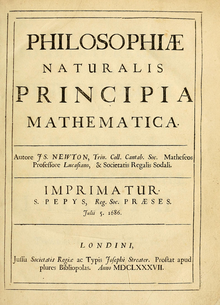
Isaac Newton's Scholium in Principia Mathematica (The hidden theories of Isaac Newton : without "absolute speeds" in Scholium and De Gravitatione, his works make no sense !!!)

presentation Yanick Toutain

REVACTU
4/1/2016


The coordinates of a body having a rectilinear trajectory in relation to a body making a circle never will trace a straight line segment.
For Newton, inertia is the straight trajectory of a body performing route "per se", objectively, in the vacuum, whether or not an observer.
We must write the truth in this anniversary day !

Newton was in fact a materialist philosopher within the meaning of the epistemology  of Lenin in 1908 (from Engels (and Marx).)
Isaac Newton had torn down the stupidities of René Descartes (inherited from .... Aristoteles) on the relative speeds, when he was 23 years old. (in his De Gravitatione)
This is how we must read the Scholium of the Principia beginnnig with the introduction.
Reading Newton's book by replacing its science by the stupidities of Einstein, Mach and Poincaré, ... is spitting in face of the biggest scientist of the human History.
Doing this is erasing the theses of the De Gravitatione.
It is thus necessary to reread attentively this text.

source: http://web.mnstate.edu/gracyk/courses/web%20publishing/NewtonScholium.htm


Sir Isaac Newton: Principia Mathematica (1687) SCHOLIUM ON ABSOLUTE SPACE AND TIME
1. Hitherto I have laid down the definitions of such words as are less known, and explained the sense in which I would have them to be understood in the following discourse. I do not define time, space, place and motion, as being well known to all. Only I must observe, that the vulgar conceive those quantities under no other notions but from the relation they bear to sensible objects. And thence arise certain prejudices, for the removing of which, it will be convenient to distinguish them into absolute and relative, true and apparent, mathematical and common.

2. Absolute, true, and mathematical time, of itself, and from its own nature flows equably without regard to anything external, and by another name is called duration: [Absolute time is to be contrasted with] relative, apparent, and common time, [which] is some sensible and external (whether accurate or unequable) measure of duration by the means of motion, which is commonly used instead of true time; such as an hour, a day, a month, a year.

3. Absolute space, in its own nature, without regard to anything external, remains always similar and immovable. Relative space is some movable dimension or measure of the absolute spaces; which our senses determine by its position to bodies; and which is vulgarly taken for immovable space; such is the dimension of a subterranean, an æreal, or celestial space, determined by its position in respect of the earth. Absolute and relative space, are the same in figure and magnitude; but they do not remain always numerically the same. For if the earth, for instance, moves, a space of our air, which relatively and in respect of the earth remains always the same, will at one time be one part of the absolute space into which the air passes; at another time it will be another part of the same, and so, absolutely understood, it will be perpetually mutable.

4. Place is a part of space which a body takes up, and is according to the space, either absolute or relative. I say, a part of space; not the situation nor the external surface of the body. For the places of equal solids are always equal; but their [boundaries], by reason of their dissimilar figures, are often unequal. Positions properly have no quantity, nor are they so much the places themselves, as the properties of places. The motion of the whole is the same thing with the sum of the motions of the parts; that is, the translation of the whole, out of its place, is the same thing with the sum of the translations of the parts out of their places; and therefore the place of the whole is the same thing with the sum of the places of the parts, and for that reason, it is internal, and in the whole body.

5. Absolute motion is the translation of a body from one absolute place into another; and relative motion, the translation from one relative place into another. Thus in a ship under sail, the relative place of a body is that part of the ship which the body possesses; or that part of its cavity which the body fills, and which therefore moves together with the ship: and relative rest is the continuance of the body in the same part of the ship, or of its cavity. But real, absolute rest, is the continuance of the body in the same part of that immovable space, in which the ship itself, its cavity, and all that it contains, is moved. Wherefore if the earth is really at rest, the body, which relatively rests in the ship, will really and absolutely move with the same velocity which the ship has on the earth. But if the earth also moves, the true and absolute motion of the body will arise, partly from the true motion of the earth, in immovable space; partly from the relative motion of the ship on the earth; and if the body moves also relatively in the ship; its true motion will arise, partly from the true motion of the earth, in immovable space, and partly from the relative motions as well of the ship on the earth, as of the body in the ship; and from these relative motions will arise the relative motion of the body on the earth. As if that part of the earth, where the ship is, was truly moved toward the east, with a velocity of 10010 parts; while the ship itself, with fresh gale, and full sails, is carried towards the west, with a velocity expressed by 10 of those parts; but a sailor walks in the ship towards the east, with 1 part of the said velocity; then the sailor will be moved truly in immovable space towards the east, with a velocity of 10001 parts, and relatively on the earth towards the west, with a velocity of 9 of those parts.

6. Absolute time, in astronomy, is distinguished from relative, by the equation or correlation of the vulgar time. For the natural days are truly unequal, though they are commonly considered as equal and used for a measure of time; astronomers correct this inequality for their more accurate deducing of the celestial motions. It may be, that there is no such thing as an equable motion, whereby time may be accurately measured. All motions may be accelerated and retarded, but the true, or equable, progress of absolute time is liable to no change. The duration or perseverance of the existence of things remains the same, whether the motions are swift or slow, or none at all: and therefore, it ought to be distinguished from what are only sensible measures thereof; and out of which we collect it, by means of the astronomical equation. The necessity of which equation, for determining the times of a phænomenon, is [shown] as well from the experiments of the pendulum clock, as by eclipses of the satellites of Jupiter.

7. As the order of the parts of time is immutable, so also is the order of the parts of space. . . . All things are placed in time as to order of succession; and in space as to order of situation. It is from their essence or nature that they are places; and that the primary places of things should be moveable, is absurd. These are therefore the absolute places; and translations out of those places, are the only absolute motions.

8. But because the parts of space cannot be seen, or distinguished from one another by our senses, therefore in their stead we use sensible measures of them. For from the positions and distances of things from any body considered as immovable, we define all places; and then with respect to such places, we estimate all motions, considering bodies as transferred from some of those places into others. And so, instead of absolute places and motions, we use relative ones; and that without any inconvenience in common affairs; but in philosophical disquisitions, we ought to abstract from our senses, and consider things themselves, distinct from what are only sensible measures of them. For it may be that there is no body really at rest, to which the places and motions of others may be referred. . . .

9. It is a property of motion, that the parts, which retain given positions to their  wholes, do partake of the motions of those wholes. . . . Therefore, if surrounding bodies are moved, those that are relatively at rest within them, will  partake of their motion. . . .

10. A property, near akin to the preceding, is this, that if a place is moved, whatever is placed therein moves along with it; and therefore a body, which is moved from a place in motion, partakes also of the motion of its place. Upon which account, all motions, from places in motion, are no other than parts of entire and absolute motions; and every entire motion is composed of the motion of the body out of its first place, and the motion of this place out of its place; and so on, until we come to some immovable place, as in the before-mentioned example of the sailor. Wherefore, entire and absolute motions can be no otherwise determined than by immovable places; and for that reason I did before refer those absolute motions to immovable places, but relative ones to movable places. Now no other places are immovable but those that, from infinity to infinity, do all retain the same given position to one another; and upon this account must ever remain unmoved; and do thereby constitute immovable space. . . .

11. The effects which distinguish absolute from relative motion are, the forces of receding from the axis of circular motion. For there are no such forces in a circular motion purely relative, but in a true and absolute circular motion, they are greater or less, according to the quantity of the motion. . . . There is only one real circular motion of any one revolving body, corresponding to only one power of endeavoring to recede from its axis of motion, as its proper and adequate effect; but relative motions, in one and the same body, are innumerable, according to the various relations it bears to external bodies, and like other relations, are altogether destitute of any real effect, any otherwise than they may partake of that one only true motion. And therefore in their system who suppose that our heavens, revolving below the sphere of the fixed stars, carry the planets along with them; the several parts of those heavens and the planets, which are indeed relatively at rest in their heavens, do yet really move. For they change their position one to another (which never happens to bodies truly at rest), and being carried together with their heavens, partake of their motions, and as parts of revolving wholes, endeavor to recede from the axis of their motions. . . .

12. It is indeed a matter of great difficulty to discover, and effectually to distinguish, the true motion of particular bodies from the apparent; because the parts of that immovable space, in which those motions are performed, do by no means come under the observation of our senses. Yet the thing is not altogether desperate; for we have some arguments to guide us, partly from the apparent motions, which are the differences of the true motions; partly from the forces, which are the causes and effects of the true motion. For instance, if two globes, kept at a given distance one from the other by means of a cord that connects them, were revolved about their common center of gravity, we might, from the tension of the cord, discover the endeavor of the globes to recede from the axis of their motion, and from thence we might compute the quantity of their circular motions. And then if any equal forces should be impressed at once on alternate faces of the globes to augment or diminish their circular motions, from the increase or decrease of the tension of the cord, we might infer the increment or decrement of their motions; and thence would be found on what faces those forces ought to be impressed, that the motions of the globes might be most augmented; that is, we might discover their hindermost faces, or those which, in the circular motion, do follow. But the faces which follow being known and consequently the opposite ones that precede, we should likewise know the determination of their motions. And thus we might find both the quantity and the determination of this circular motion, even in an immense vacuum, where there was nothing external or sensible with which the globes could be compared. But now, if in that space some remote bodies were placed the kept always a given position one to another, as the fixed stars do in our regions, we could not indeed determine from the relative translation of the globes among those bodies, whether the motion did belong to the globes or to the bodies. But if we observed the cord, and found that its tension was that very tension which the motions of the globes required, we might conclude the motion to be in the globes, and the bodies to be at rest; and then, lastly, from the translation of the globes among the bodies, we should find the determination of their motions. But how we are to collect the true motions from their causes, effects, and apparent differences; and, vice versa, how from the motions, either true or apparent, we may come to the knowledge of their causes and effects, shall be explained more at large in the following tract. For to this end it was that I composed it.

mardi 22 octobre 2013

Vitesse absolue: Un article RevActu en 3° ligne de la recherche Google ! Le robot sait qui sont les vrais partisans de Isaac Newton

Vitesse absolue Un article RevActu en 3° ligne de la recherche Google Le robot sait qui sont les vrais partisans de Isaac Newton source Mediapart-Blog

Définition 1: Le lieu est la partie de l'espace qu'une chose remplit exactement.
Def: 1. Locus est spatij pars quam res adæquatè implet.a
--
Définition 2 : Le corps est ce qui remplit le lieu.
Def: 2. Corpus est id quod locum impleta
--
Définition 3 : Le repos est la persistance en un même lieu.
Def: 3. Quies est in eodem loco permansio
---
Définition 4 : Le mouvement est le changement de lieu.
Def: 4. Motus est loci mutatio
Isaac Newton 23 ans dans le De Gravitatione
source
 
Pour connaître les deux pseudo-vitesses apparentes, n'importe quelle méthode peut être utilisée.
Citons pour mémoire
  • variation des diamètres visibles des deux corps (ou de deux sphères de référence – aux diamètres connus - placées sur le corps de l'autre)
  • calcul du décalage vers le rouge des couleurs du corps observé.
  • utilisation de flashs lumineux émis à intervalles réguliers et reçus avec des périodes de réceptions différentes des périodes d'émission.
  • Etc... etc..
    article infra.
Les escrocs relativistes contrôlent les médias français. 
Comme les esclavagistes du gang Bolloré contrôlent ces mêmes médias et les juges voyous.
N'essayez pas de défendre les véritables thèses de Newton, d'expliquer que les prétendus héritiers de Newton sont des imposteurs ennemis des thèses du De Gravitatione, des Principia.... Vous ne trouverez aucun média pour relayer vos propos.
Même Stacy MacGaugh qui par Milgrom tente de perpétuer la révérence à la relativité est lui-même l'objet d'une mise à l'index.
Celui qui, avec Tully et Fisher aurait mérité un Nobel pour avoir prouvé l'absence de matière noire en validant une proportionnalité entre la racine carré de la lumière émise par les galaxies et le carré des vitesses de révolution est parfois mis sur le devant. Un numéro de Sciences et Vie, quelques articles dans Ciel et Espace..... au milieu des âneries des escrocs disciples de Vera Rubin.
(cf ma vidéo démontrant que les équations de Newton suffisent à démonter les idioties de Matière noire en expliquant les grandes vitesses de révolution sur le pourtour par l'effet zone neutre et la formation des spirales par l'effet bandes)
UN ROBOT FAIT CONNAITRE LA VRAIE SCIENCE (GOOGLE FIGURERA DANS L'HISTOIRE DES SCIENCES !)

C'est donc UN robot qui aura eu le mérite de pallier aux "insuffisances" des imposteurs titrés journalistes scientifiques.
En effet, quelle ne fut ma surprise de voir le mot "vitesse absolue" apparaitre dans la liste des mots dont la recherche a incité des lecteurs à venir sur RevActu.
Cela explique les 94 visites - depuis un mois - sur cette page datant de mars 2010.
Comme le hasard fait bien les choses, je viens récemment de faire une nouvelle récouverte : le "rail de Newton" ou comment connaître notre vitesse sans avoir connaissance de la direction de notre translation absolue - sans connaître l'angle alpha ci-dessous.
La publication est en cours de rédaction.
Voici donc l'article que le robot Google place - à juste titre - en troisième ligne de la requête "vitesse absolue"

ABSTRACT : Simple method to calculate the absolute speeds of two bodies in motion.
RÉSUMÉ : Une méthode simple pour calculer les vitesses absolues de deux corps en mouvement


Avertissement :
Contrairement aux mensonges et à toutes les élucubrations répandues à longueur de pages de livres, de sites internet, de propagande « professorale » de « clowns titrés professeurs », il existe des moyens très simples de connaître notre vitesse absolue.


Exposé : Soit deux corps S et W. Ces deux corps sont en mouvement. Chacun est capable de déterminer la pseudo-vitesse de l'autre, sa vitesse apparente. Naturellement, ils se suivent et n'ont aucune accélération. Cette absence d'accélération est facilement détectable par l'absence de gravité locale apparente.
Pour connaître les deux pseudo-vitesses apparentes, n'importe quelle méthode peut être utilisée.
Citons pour mémoire
  • variation des diamètres visibles des deux corps (ou de deux sphères de référence – aux diamètres connus - placées sur le corps de l'autre)
  • calcul du décalage vers le rouge des couleurs du corps observé.
  • utilisation de flashs lumineux émis à intervalles réguliers et reçus avec des périodes de réceptions différentes des périodes d'émission.
  • Etc... etc...
Deux astronautes en déplacement seront – pour les siècles qui viennent – parfaitement capables de déterminer quelles sont leurs vitesses absolues par ce moyen simplissime.
Ou encore, une fusée unique n'aura qu'à lancer un corps devant (ou derrière) elle – une sorte de « canot  de sauvetage» ayant la fonctionnalité des nœuds des marins d'autrefois, un « canot » qui, après stabilisation initiale et interruption de son accélération, pourra émettre un signal en direction de la fusée et recevoir le signal émis par la fusée. Les variations de couleur (redshift) servant de preuve redondante de ces pseudo-vitesses obtenues.
Considérons donc que la fusée soit appelée « Walter ». Et qu'elle lance son canot de sauvetage « Sam » vers l'arrière.
La fusée mesurera, pour Sam, une pseudo-vitesse apparente égale à m.
On a donc
m = pseudo-vitesse apparente de Sam pour Walter
De la même façon, le canot de sauvetage Sam, mesurera une pseudo-vitesse apparente de Walter. On l'appellera l
l = pseudo-vitesse apparente de Walter pour Sam
Il faut, tout de suite remarquer que
m > l
Si tel n'était pas le cas, cela indiquerait le fait que la fusée ….. avançait vers l'arrière !!!
CALCULS DE NOS VITESSES ABSOLUES
Nous allons simplement utiliser deux formules qui vont nous donner les vitesses absolues des deux corps. Dans l'équation n'apparaissent que les deux données et la vitesse de la lumière. Cette dernière est indiquée par un « C » majuscule en lettre cursive.
W =C *( C * ( m – l )+l *m )/( C * ( m + l ) - l *m)
Nous venons de calculer la vitesse absolue de Walter.
Cette vitesse, quoi qu'elle ait été obtenue par la mesure faite depuis la fusée et le canot de sauvetage, est, malgré cela, une VITESSE ABSOLUE, une vitesse « en soi », une vitesse par rapport au vide.
De la même façon, nous pouvons connaître la vitesse du canot, la vitesse de Sam.
S =C *( C * ( m – l )- l *m )/( C * ( m + l ) - l *m)


Il est à remarquer que la deuxième formule ne diffère de la première que par un seul symbole : le signe « + » utilisé sur le numérateur de la fraction pour calculer la vitesse absolue de Walter est devenu « - » pour calculer la vitesse absolue de Sam.
On remarquera, par ailleurs que
S < W
En effet, la vitesse absolue de Walter la fusée est plus grande que la vitesse absolue de Sam, le canot de sauvetage.
C'est d'ailleurs ce fait essentiel qui permet de fonder cette expérience qui est plus qu'une simple expérience, qui est une modalité de connaissance du réel.
DISSYMÉTRIE DES TRAJECTOIRES PAR RAPPORT AUX TRAJECTOIRES DES SIGNAUX
C'est en effet, le fait que lorsque deux corps émettent un signal – quel que soient leurs directions respectives – il y aura toujours (sauf rarissimes trajectoires parfaitement parallèles) un des deux corps qui va à rencontre du signal de l'autre et l'autre corps qui fuit le signal émis par son collègue.
C'est précisément parce que Walter fuit le signal émis par Sam que le trajet du signal provenant de Sam devra être augmenté de la longueur du trajet supplémentaire parcouru par Walter.
Tandis que c'est le fait que Sam aille à la rencontre du signal émis par Walter qui réduit la longueur du parcours de ce signal d'une distance égale à celle que Sam aura parcouru pendant le trajet.
DES RELATIVISTES AVEC UN POINT AVEUGLE
La raison pour laquelle les orthodoxes relativistes sont restés aveugles à un tel calcul pendant un siècle est très simple à comprendre.
Ces charlatans confondent constamment la réalité et leur perception de la réalité. Pire encore, ils considèrent – comme Lénine le dénonçait déjà dans les textes de Mach, de Poincaré et des autres « clowns titrés professeurs » – comme de la « métaphysique » l'existence de la réalité en soi, l'existence de l'univers indépendamment de nos perceptions. L'acharnement stupide de Einstein à nier l'existence de nos vitesses absolues sans qu'il se soit jamais donné la peine de tenter de contredire rationnellement Newton provient de là. (Il y aura, après la lecture de ce texte, des acharnés pour aller prétendre que le fait d'aller vers un signal ou de le fuir serait dépourvu de signification; de conséquences. Ces irrécupérables sont bons pour la retraite définitive !!! Ils sont la cohorte démarquée par Max Planck.)
C'est cet autisme relativiste qui leur fait appeler « vitesse » ce qui n'en n'est absolument pas.
Quand, après un délai « t », Walter reçoit un signal ayant parcouru – pendant un délai q - une distance égale à c * q, les relativistes effectuent la division c * q / t et appellent ce résultat « vitesse » de Sam pour Walter.
m = C *q / t
C'est ce que nous avons appelé « m », en tant que pseudo-vitesse de Sam pour Walter.
De la même façon,, la trajectoire de durée j effectuée par le signal provenant de Walter en direction de Sam est pour nous
l = C *j / d
C'est la pseudo-vitesse de Walter pour Sam. Obtenue par Sam en attendant pendant un délai d que l'image du flash émis par Walter lui parvienne (cf le texte complémentaire)
Et la clé des deux formules « magiques » données ci-dessus, se trouve dans l'étude matérialiste de la réalité. C'est, en effet, l'étude de la réalité en considérant les vitesses absolues, les vitesses objectives des deux corps comme le point de départ qui nous ont donné ces deux formules magiques.
C'est en effet à partir de W et de S que nous avons calculé – conceptuellement – les valeurs de m et de l.
m = C * (W - S) / ( C - S )
l = C * (W - S) / ( C + W )
On remarque, ici, que les valeurs de S et de W apparaissent dans ces deux équations comme opposées l'une à l'autre. S est utilisé sous une forme négative car le signal va en direction de Sam, tandis que Walter qui fuit le signal voit la valeur de sa vitesse absolue apparaître de façon positive avec le signe. « + »
Le lecteur qui souhaitera avoir les renseignements complémentaires sur les étapes premières de façon détaillée trouvera ses réponses dans l'autre texte (qui n'est qu'une version remixée de l'ancien texte « cours de science objective » déposé sur USENET en 2007)


LIRE AUSSI :
LUNDI 22 MARS 2010 
par Yanick Toutain
22/03/2010 20:43


SAMEDI 20 MARS 2010 
Yanick Toutain
20/03/2010


VENDREDI 19 MARS 2010 

Publié par Yanick Toutain à 3/22/2010 12:55:00 PM 


SUPPLEMENT

La copie des premières lignes de la recherche Google Vitesse absolue

mardi 27 août 2013

Pourquoi les escrocs du CERN sont des censeurs fascistes incapables de débattre avec les partisans de Newton

parYanick Toutain


La totalité de l'édifice pseudo-conceptuel connu sous le nom de relativité restreinte et fabriquée par les charlatans Poincaré-Einstein-Mach-Lorentz & C° est une suite d'élucubrations visant à nier l'objectivité du réel. Ils ont jeté par-dessus bord le socle de la science de Newton. Sans jamais l'avouer. Pour que le secret de cette escroquerie soit gardé, il est nécessaire pour les enseignants du monde entier de passer sous silence le livre extraordinaire écrit par le jeune Newton à l'âge de 23 ans : De Gravitatione. Dans ce livre, le concept de "lieux" balayait toutes prétentions ultérieures des partisans avoués ou secrets du minable Descartes. 

Les fondements à partir desquels il faut démontrer cette science sont soit les définitions de certains mots, soit les axiomes et postulats que nul ne peut refuser. Je vais les exposer sur le champ.
Fundamenta ex quibus haec scientia demonstranda est sunt vel definitiones vocum quarundam ; vel axiomata et postulata a nemine non concedenda. Et hæc e vestigio tradam.
==
Définitions
Les noms de quantité, de durée et d'espace sont trop connus pour pouvoir être définis pas d'aitres mots.
Definitiones
Nomina quantitatis, durationis et spatij notiora sunt quàm ut per alias voces definiri possint.

-
Définition 1: Le lieu est la partie de l'espace qu'une chose remplit exactement.
Def: 1. Locus est spatij pars quam res adæquatè implet.a
--
Définition 2 : Le corps est ce qui remplit le lieu.
Def: 2. Corpus est id quod locum impleta
--
Définition 3 : Le repos est la persistance en un même lieu.
Def: 3. Quies est in eodem loco permansio
---
Définition 4 : Le mouvement est le changement de lieu.
Def: 4. Motus est loci mutatiob
--
A noter : j'ai dit que "le corps remplit le lieu" pour signifier qu'étant impénétrable il le remplit de telle manière qu'il en exclut entièrement d'autres choses de même genre ou d'autres corps. On pourrait dire aussi d'un lieu qu'il est une partie de l'espace dans laquelle une chose se trouve exactement, mais comme on ne considère ici que des corps et non des choses pénétrables, j'ai préféré définir le lieu comme la partie de l'espace qu'une chose remplit.

Nota. Dixi corpus implere locuma, hoc est ita saturare <2> ut res alias ejusdem generis sive alia corpora penitus excludat, tanquam ens impenetrabile. Potuit autem locus dici pars spatij cui res adæquatè inest, sed cùm hic corpora tantùm et non res penetrabiles spectantur, malui definire esse spatij partem quam res implet.

Texte en français Traduction Marie Françoise Biarnais Les Belles Lettres 1985

et aussi


The terms quantity, duration, and space are too well known to be susceptible of definition by other words.
Def. 1. Place is a part of space which something fills evenly.
Def. 2. Body is that which fills place.
Def. 3. Rest is remaining in the same place.
Def. 4. Motion is change of place. (Hall, A. R. and N.B. Hall, eds., Unpublished Scientific Papers of Isaac Newton, Cambridge University Press, 1962, 122)

Chaque corps se déplaçant d'un lieu objectif à un autre lieu objectif, cela fondait une gnoséologie totalement matérialiste : la connaissance des déplacements relatifs (d'un endroit relatif à un autre endroit relatif) était subordonnée à une translation sans observateur nécessaire.
De ce point de vue,, Isaac Newton était bel et bien le père conceptuel de Lénine dans son Materialisme et empiriocriticisme. Les escrocs relativistes censurent - de facto - cet ouvrage de Newton : que les élèves en prennent connaissance avant que la pathologie consumériste ne les ait transformé en crétins avident de diplômes, de fric et de confort proto-bourgeois et l'imposture s'écroulera d'elle-même: Les étudiants conserveront les 4 premières thèses du De Gravitatione comme socle de leur savoir. Plus jamais ces étudiants n'accepteront de considérer l'inertie comme autre chose qu'un mouvement rectiligne objectif dans le vide. Plus jamais ces étudiants ne croiront à cette ânerie des "températures absolues" basées sur (la moyenne des carrés) des pseudo-vitesses relatives. Plus jamais ces étudianets ne prendront au sérieux ces abrutis qui rédigent des livres et enseignent en avançant l'idée qu'on puisse considérer que le Soleil tourne autour de la Terre ou que la Terre tourne autour de la Lune. Plus jamais ces étudiants n'accepteront le "libre choix du référentiel" : une bêtise masquant hypocritement le fait que Einstein en est intellectuellement resté à Ptolemée !
Le pire, c'est que le SOCLE des PRINCIPIA - les Scholies - tous ces escrocs parviennent à passer sous silence le fait qu'il contredit absolument la totalité du prétendu savoir qu'ils vont distiller à leurs malheureuses victimes !

La révolution mondiale va faire un grand ménage !


JEUDI 8 AVRIL 2010


Why the swindlers of CERN are fascist censors unable to debate with Newton's partisans

an article by Yanick Toutain

The whole pseudo-conceptual edifice known as the "special relativity" and manufactured by swindlers Poincaré-Einstein-Mach-Lorentz and C ° is a result of wishful thinking aiming to deny the objectivity of reality. They threw overboard the foundation of the science of Newton. Never admit it.
With the project to maintain secrecy on this scam, it is necessary for teachers around the world to remain silent on  the extraordinary book written by the young Newton at the age of 23 years: De Gravitatione.
In this book, the concept of "places" swept all further claims  of Descartes's (public or secret) supporters.

The terms quantityduration, and space are too well known to be susceptible of definition by other words.
Def. 1. Place is a part of space which something fills evenly.
Def. 2. Body is that which fills place.
Def. 3. Rest is remaining in the same place.
Def. 4. Motion is change of place. 
Every body moving from one place to another objective place, it found a totally materialistic gnoseology.
{NB Gnoseology is a part of philosophy. Its object is to determine WHAT we can know. And Iuse the concept of epistemology only to describe the History of a discovery}
:The knowledge of the relative displacements (form a relative location to another relative location) was subject to a translation without observer necessary.
From this point of view, Isaac Newton was indeed the conceptual father of Lenin in his "Materialism and empiriocriticism".
Relativistic crooks are censoring  - de facto - this Newron's book : If the students became aware before they being affected by consumerist pathology, before they have turned into morons eager of diplomas, eager of money and of proto-bourgeois comfort and deceit will crumble to itself: Students will retain the first four theses of the De Gravitatione as the basis of their knowledge.

Nevermore these students will accept to consider inertia as anything other than a straight movement in the empty space.
Nevermore these students will believe this nonsense "absolute temperature" based on (mean square) of relative pseudo-velocities.
Nevermore these students will not take seriously these morons who write books and teach in advancing the idea that we can consider that the Sun revolves around the Earth or that the Earth revolves around the Moon.
Nevermore these studeJnts will accept "free choice of reference": a stupidity masking hypocritically that Einstein is intellectually remained on at the pseudo "knowledge" of Ptolemy!


The worst thing is that the BASE of the PRINCIPIA - the Scholia - all these scammers are able to ignore the fact that it absolutely contradicts the entire claimed "knowledge" that they will distill their hapless victims!

The world revolution will make a great household!


JEUDI 8 AVRIL 2010